Customized Modular FDM Printer
A solution to print large objects at once

OVERVIEW
This modular FDM 3D printer was built to provide a scalable, cost-effective solution for large-volume printing. Designed with ball screws, aluminum extrusions, and a rigid frame, the system enables smooth, precise motion and future expandability. The prototype supports one-cubic-foot prints and serves as a foundation for future teams to build upon.
Skills
Mechanical Design,
Additive Manufacturing,
Motion System Design,
Machining,
Thermal Control,
Cost Analysis,
System Integration
Roles
Mechanical Designer & CAD Modeler
Motion System Engineer
Manufacturing Strategist & Cost Analyst
Contributors
Sihan Zheng
Michael Barany
Rachel Gardiner
Background
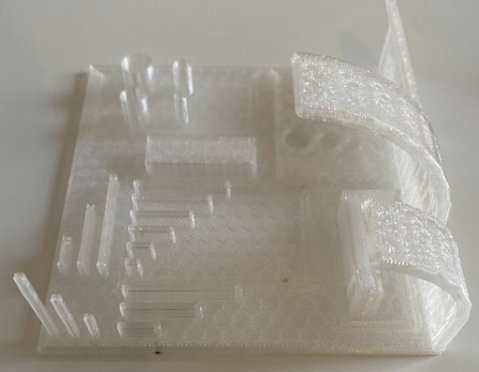
As 3D printing becomes more integral to engineering workflows, existing desktop printers often fall short when it comes to producing large parts.
These limitations force users to split models into smaller sections, introducing weak joints, increased labor, and extended print times.
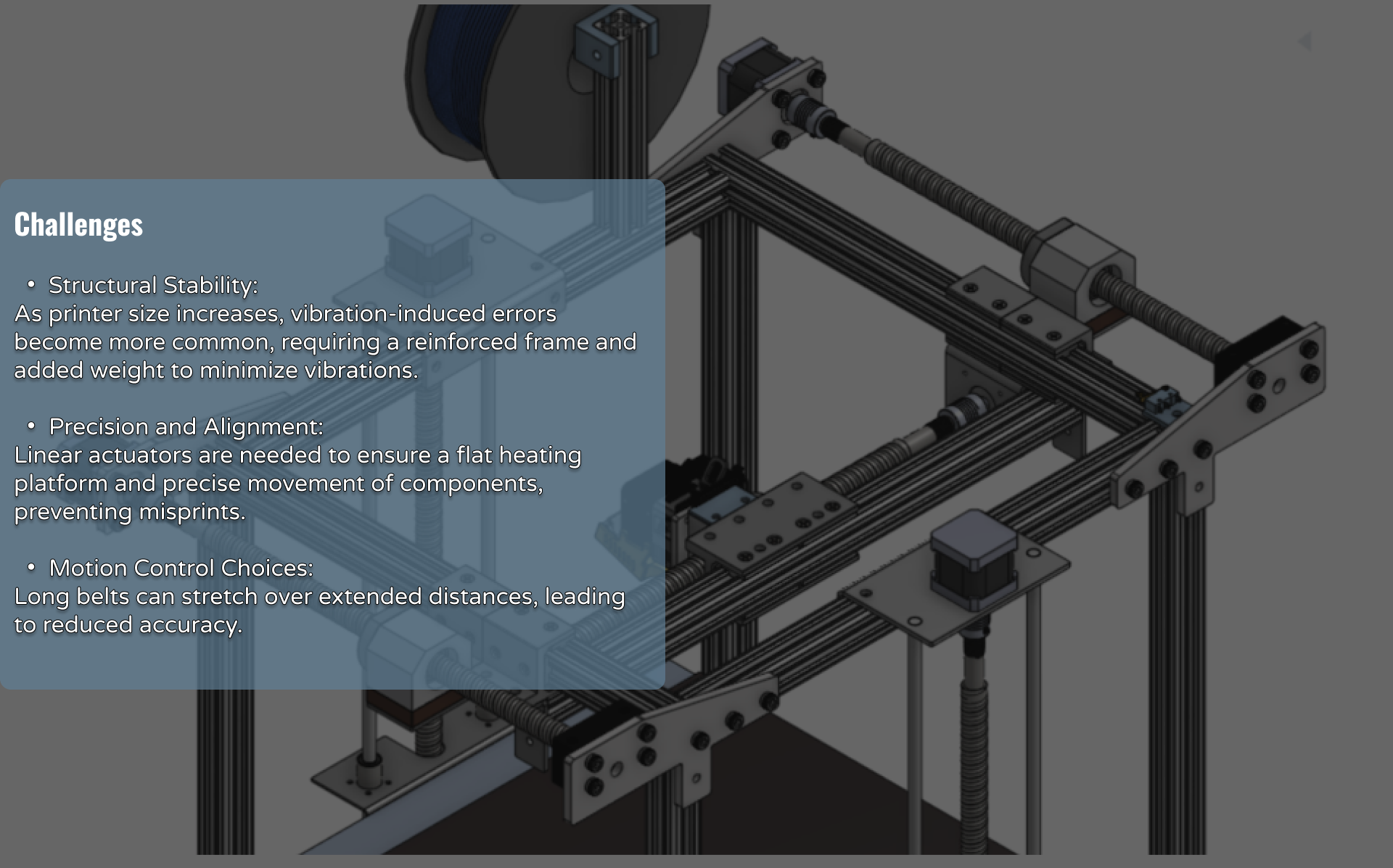
Additionally, large-format printing presents new challenges—such as warping, vibration-induced errors, and calibration difficulties—that compromise print quality.
About the Process
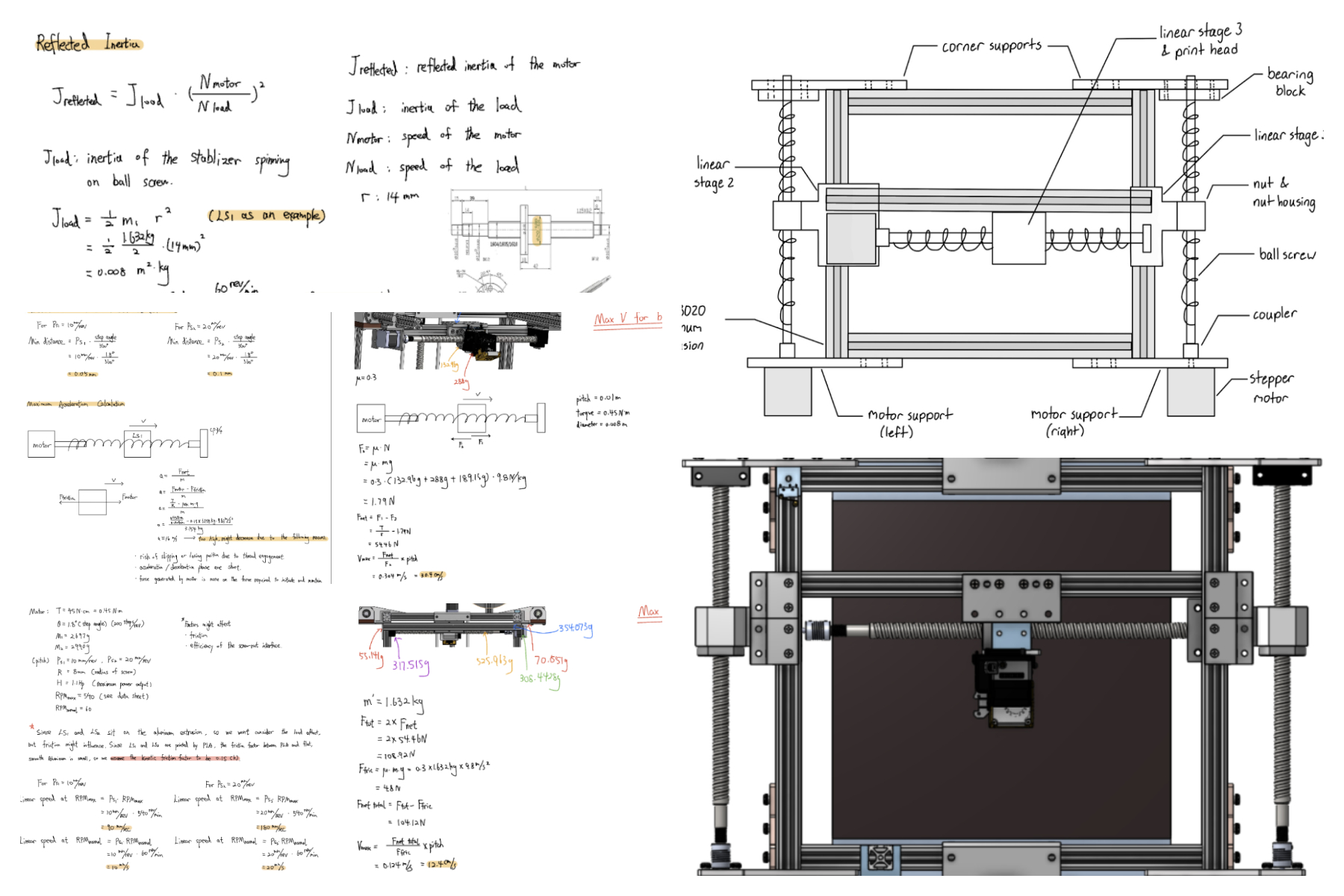
- I began the design process by calculating key mechanical parameters like reflected inertia, motor torque, and maximum linear velocity to ensure smooth and accurate motion across the system.
- Using hand calculations and mechanical analog models, I analyzed how the mass of the carriage and ball screw geometry would affect dynamic performance.
- I also created early CAD sketches to explore structural configurations, focusing on dual ball screw stages and rigid motor supports. These insights helped me decide to use ball screws instead of belts for greater precision and scalability.
- Belt Drives are lightweight, low-cost, and easier to assemble. They offer sufficient speed and accuracy for small- to medium-scale 3D printers, but their performance degrades over long spans due to belt stretch, leading to reduced positional accuracy and potential backlash.
- Ball Screws provide high precision, rigidity, and smooth motion control, making them ideal for large-format printing and applications requiring consistent accuracy. However, they are heavier, more expensive, and involve more complex assembly.
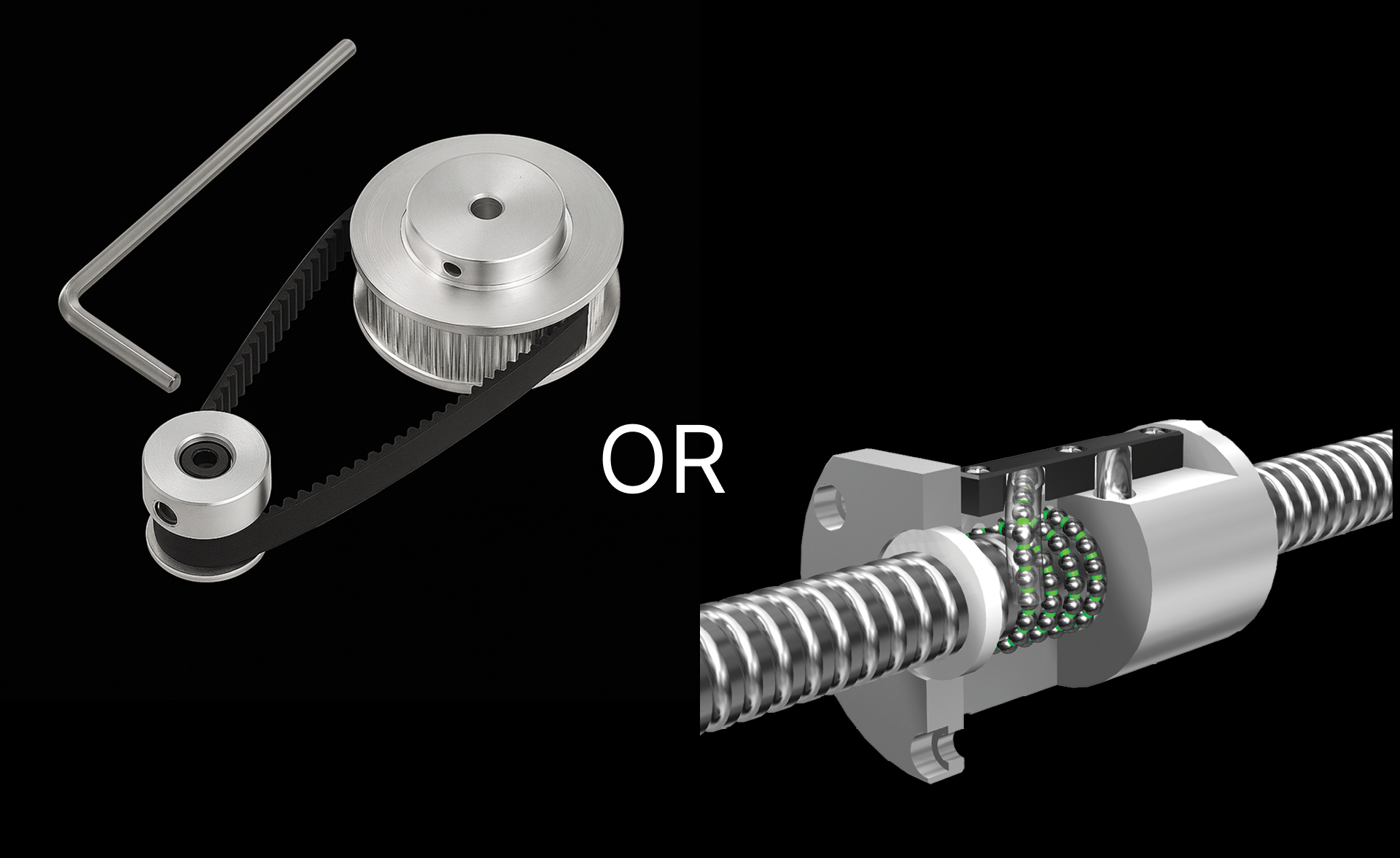
After running detailed calculations on reflected inertia, acceleration, and linear speed, I realized that belts—though common in smaller 3D printers—would introduce too much stretch and positional error over the extended spans required for a scalable system. By using ball screws, I was able to optimize for stability, accuracy, and modular scalability, even if it meant a higher upfront cost and increased weight.
Design documentation
Product & User Flow
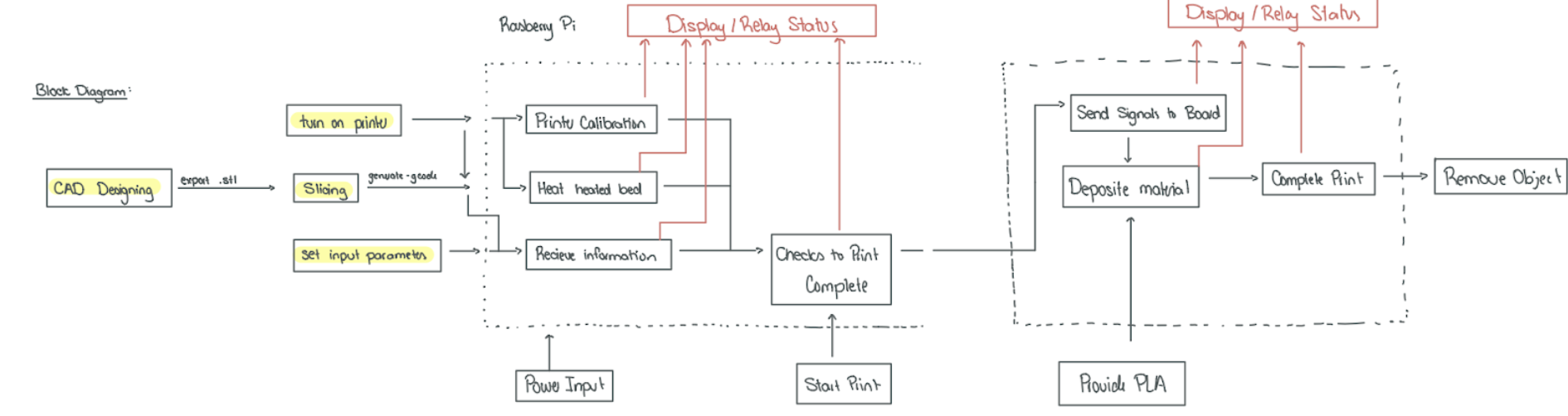
After generating a .stl file, the user slices the model and sets printing parameters. A Raspberry Pi handles printer calibration, heating, and print verification before initiating material deposition. Real-time status updates are displayed throughout the process, ensuring transparency and smooth operation. Once printing is complete, the user removes the printed part to finalize the cycle.
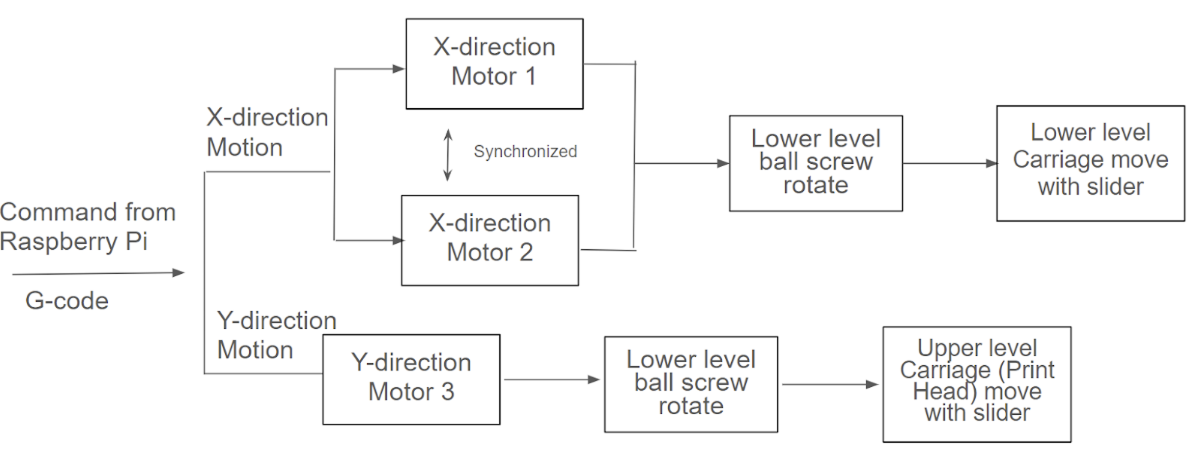
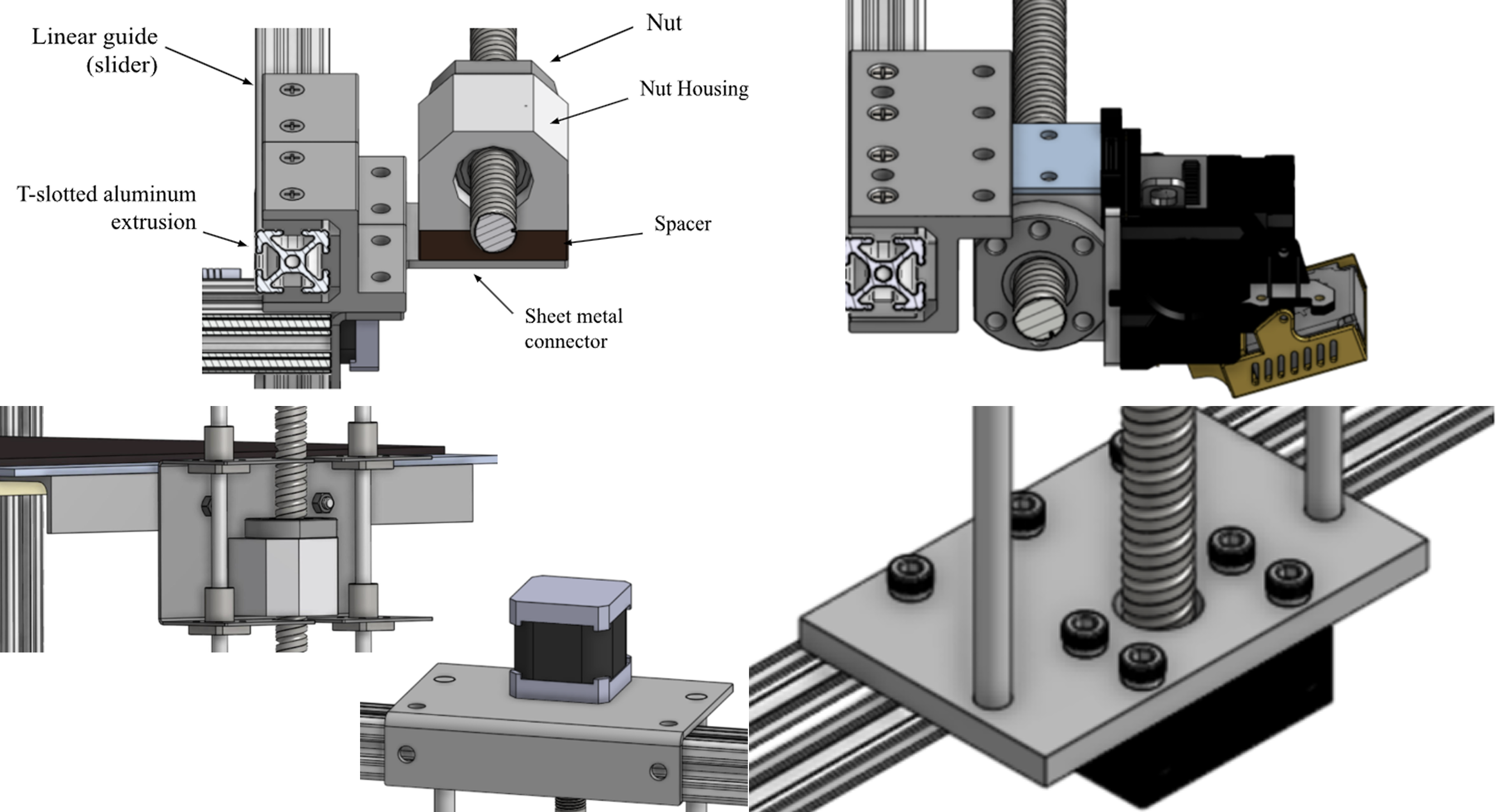
Two synchronized X-direction motors drive the lower-level carriage via ball screws, while a third motor handles Y-direction motion to move the print head. Each motion is translated through precision ball screw rotation, ensuring smooth linear travel of the sliders and carriages for accurate material deposition.
My Approach
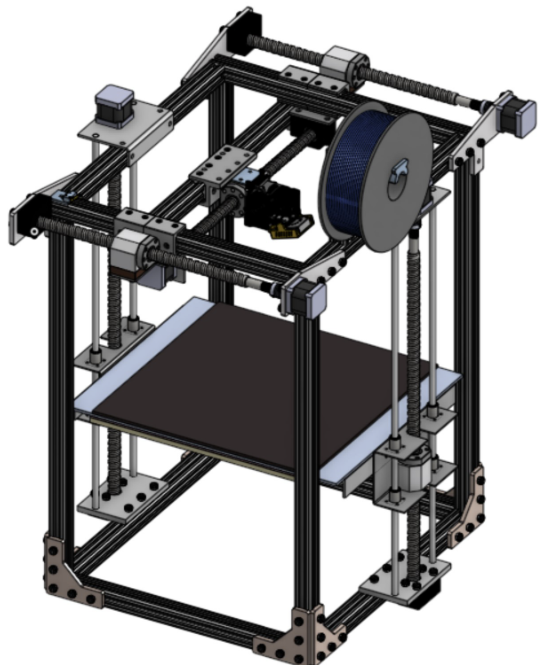
- Structure and Materials:
An aluminum frame was chosen for stability, and ball screws were used instead of belts for more accurate and stable movement.
- Modular Components:
The printer’s X, Y, and Z movements were designed with detachable and expandable components, making it easy to resize in the future.
- Testing and Electronics:
Key components like motors and the heated bed were tested, and the Duet 3 control board was used to manage motion and temperature control, reducing issues like warping.
- Prototype Testing and Improvements:
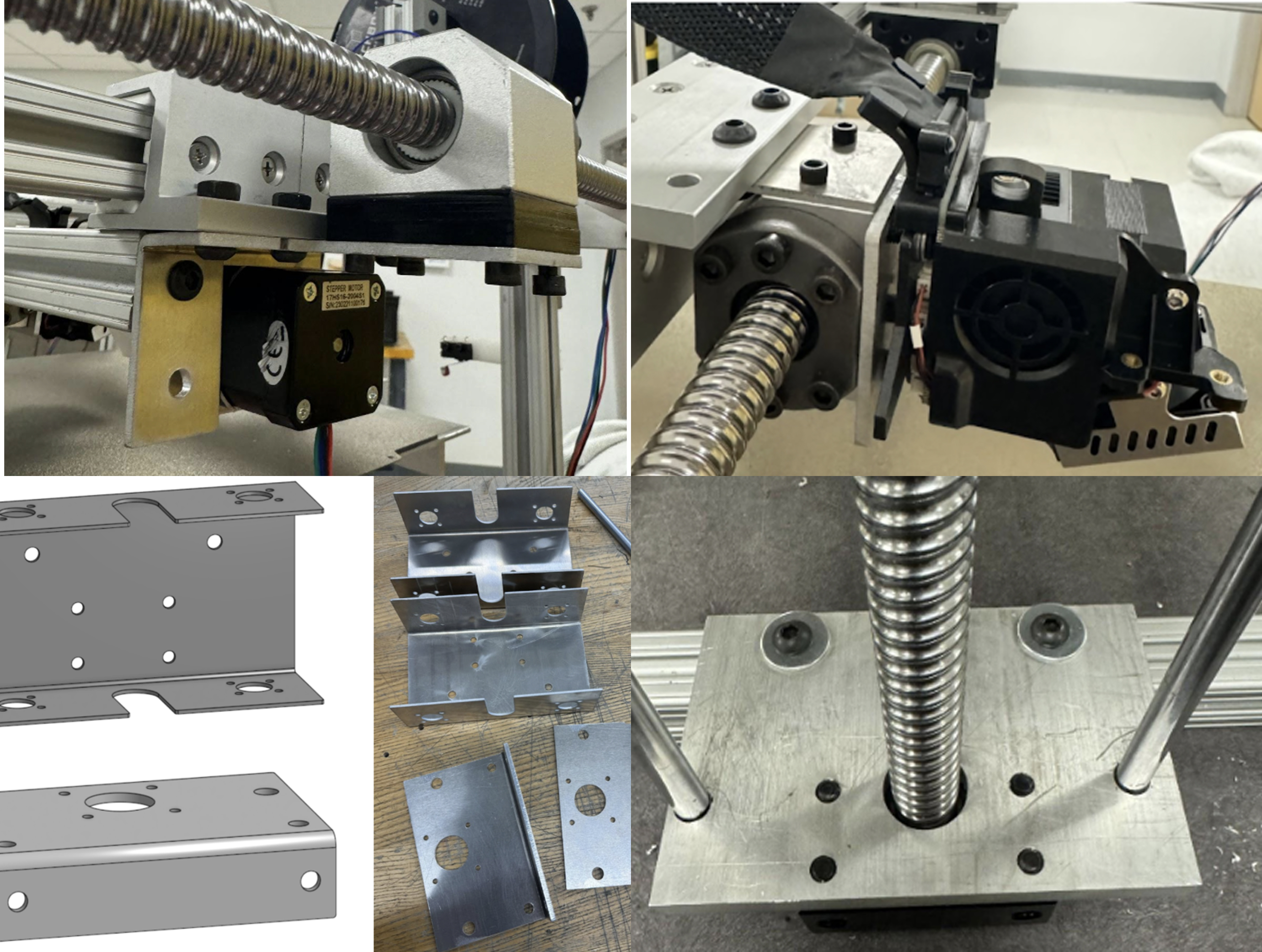
PLA parts initially used in the prototype showed weaknesses, so they were replaced with stronger aluminum parts. A heated bed and enclosed structure were added to prevent warping.
Prototyping Process
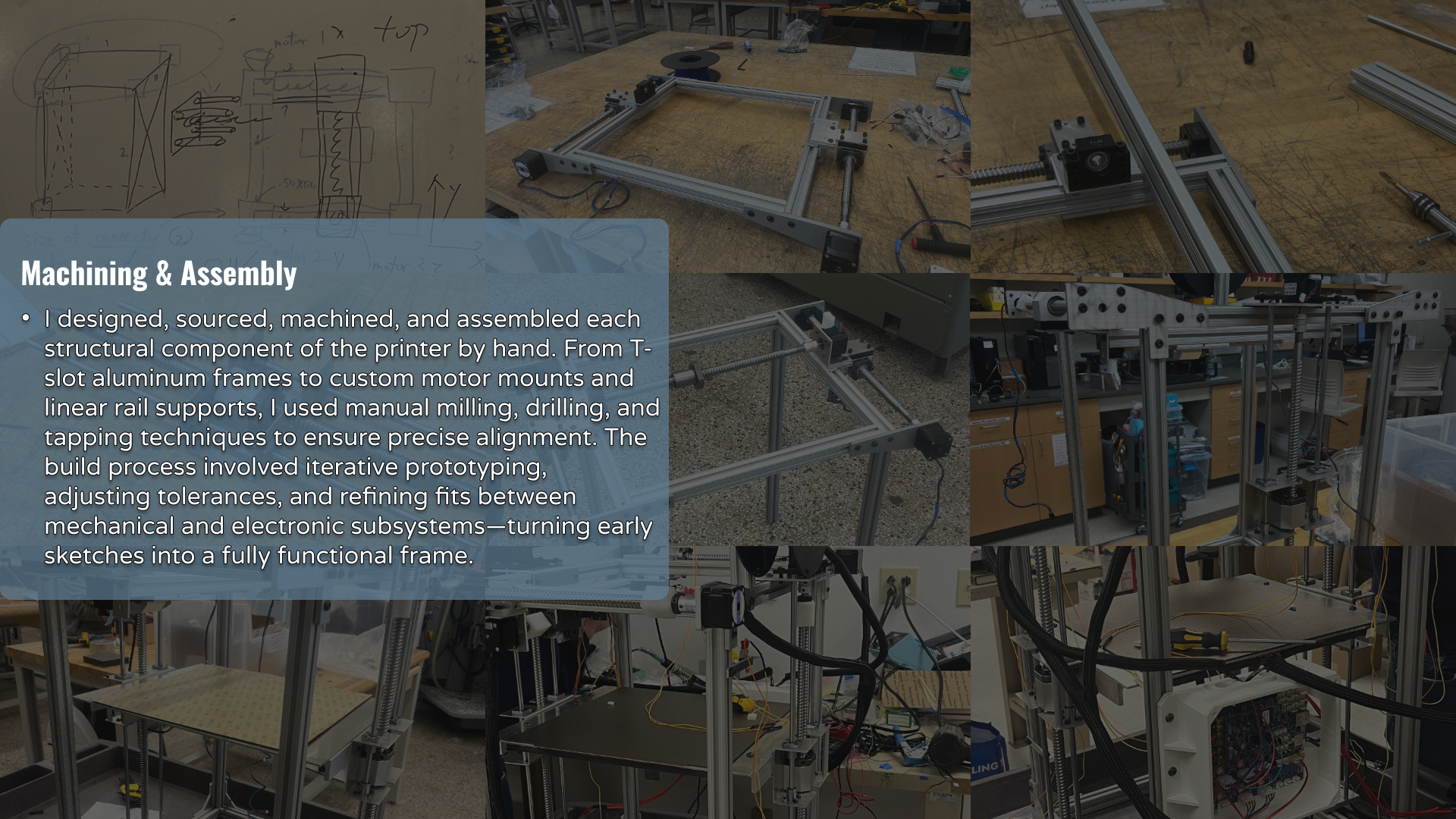
OutCome
.gif)
This is a functional prototype of a modular, large-format 3D printer that successfully meets initial goals for precision, stability, and expandability.
The modular design allows future teams to expand the printer's build volume easily by using the same framework and components. This prototype provides Boston University with a foundational tool that can be customized for larger and more complex additive manufacturing tasks in the future.